
The way we work is changing fast, and it’s hard to keep up. Many people and organizations are stuck, trying to make sense of this chaotic space. They hesitate, missing out on opportunities to adapt and thrive.
I’ve seen it firsthand. The shifts in our professional environments are often so subtle that you might not notice them until it’s too late.
This article digs into the future of work, tracing how workplaces evolved from their basics to what they are today. I aim to provide an analytical understanding of these changes, backed by solid historical data, economic trends, and sociological takeaways.
I promise to deliver a clear, fact-based perspective on the forces reshaping our work lives. It’s important to understand how technology and societal shifts have transformed the workplace.
This isn’t just dry data. It’s a guide to navigating the complexities of modern work. You’ll walk away with a clearer view of where we’ve been and where we’re headed.
Let’s break down this together.
From Fields to Factories: The Rise of Labor
I remember growing up hearing tales of my great-grandparents working the land. Back then, everything was self-sufficient and family-oriented. You worked not just for money, but to eat, to live.
Then came the shift. Artisan workshops sprouted, and guilds formed with their master-apprentice dynamics. Craftsmanship was key.
It’s funny how specialized skills were both revered and guarded.
But everything changed with the Industrial Revolution. Suddenly, production moved from cozy homes to bustling factories. It wasn’t just about making things.
It was about making them fast. The division of labor turned complex tasks into simple, repetitive jobs. You could say this was the beginning of “employment” as we know it.
Urbanization brought people to industrial hubs, and with it, a slew of social challenges. Crowded cities, poor working conditions, and a new kind of social struggle emerged. The future of work seemed uncertain.
How would society adapt?
If you’re curious about how technology intersects with privacy, take a look at the Technology Privacy Intersection. It’s a fascinating topic. The workers of the past could hardly imagine the debates we have today about privacy in our tech-driven world. Industrialization was only the beginning.
The Rise of the 20th Century Corporate Beast
The 20th century was a wild ride for the workplace. Scientific Management, or Taylorism, turned humans into cogs in the efficiency machine. It was all about speed and precision.
You’d understand why unions stormed in.
And then Fordism came along with its assembly line magic. This wasn’t just about making cars; it shaped everything about how we work. Imagine being a worker then.
Bureaucracy got its claws into organizations, thanks to Max Weber’s ideas. Hierarchies, formal rules, and impersonal operations ruled the day. Some think we got bogged down by all the red tape.
But let’s not forget, it kept things in check.
The corporate office transformed into a hub of white-collar work and paperwork. A place buzzing with knowledge and administrative tasks. Here’s a thought: was it really progress or just another layer of complexity?
Unionization was a game changer too. It fought for worker rights and fair wages (a big deal back then). Women and minorities slowly edged into these spaces, challenging the old norms, and boy, did they bring change.
It set the stage for the future of work.
What does this mean for us now?
The Digital Shift: Connectivity Meets Automation
I remember when the first personal computers started appearing in offices. It was like a scene out of a sci-fi movie. These bulky machines became the heart of workspaces, forever altering our approach to tasks.
And the internet? A miracle. It connected us in ways that seemed impossible.
We weren’t just emailing. Entire teams collaborated globally. The dawn of global connectivity had arrived, changing everything.
Automation followed suit, taking over routine tasks. Suddenly, our focus shifted. Knowledge work, data processing.
These weren’t just terms but realities. We were free to engage in more meaningful work. Frankly, who wouldn’t want that?
Of course, challenges sprang up. Data management became a beast to tame. Skills needed updating.
Remote work was a revelation. Early telecommuting wasn’t perfect, but it was a start. Our digital infrastructure was still young then (not like today’s sleek systems).
We had to adapt or get left behind. (Adapting wasn’t optional.) The future of work wasn’t just a concept. It was upon us.
Yet, we managed. We embraced the potential of working from anywhere. In many ways, these pioneering years set the stage for how we work now.
Who knew we’d be this connected?
The Future of Work: Shaping the New Norm
The pandemic changed everything. Suddenly, remote and hybrid work models weren’t just an option; they were a necessity. But here’s the kicker: these changes are here to stay.

Companies had to pivot (quickly) to keep up. What does this mean for the future of work? It means embracing flexibility while tackling new challenges.
Take the gig economy. Sure, it offers freedom, but it also brings uncertainty. Freelancers revel in setting their own hours, but let’s not ignore the lack of security.
As the gig economy expands, so do questions about long-term stability. Are companies ready to address this? I have some doubts.
Then there’s the emphasis on employee well-being. It’s not just a buzzword. It’s important.
Organizations are scrambling to integrate work-life balance, and if they’re smart, they’ll keep mental health front and center. But will they? Only time will tell.
And what about corporate culture? Adaptable leadership must step up. Physical office spaces remain a hot topic.
Some say they’re relics, while others argue for their role in fostering community. Who’s right? Maybe both sides have a point.
In this whirlwind world, the future of work is both exciting and daunting. How will you adapt?
The Future Horizon: AI and the Human Touch
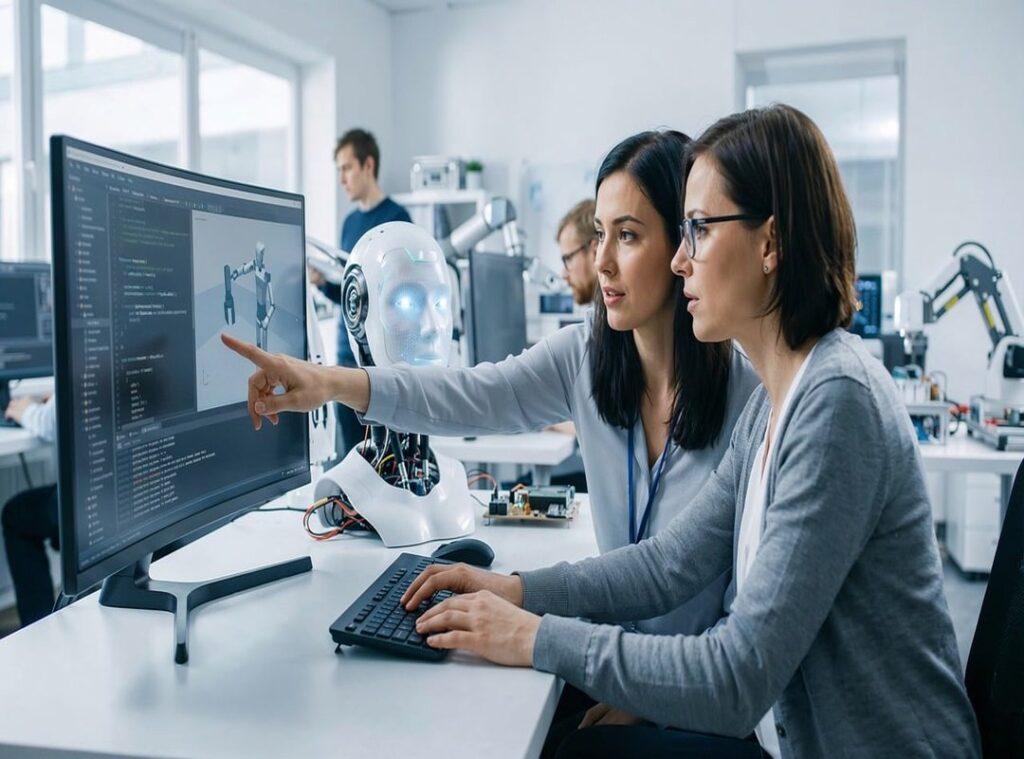
Artificial Intelligence is shaking things up. People freak out about robots snatching jobs, but let’s get real. Automation isn’t a replacement.
It’s a collaboration. We need to work with AI, not against it. Are you wondering how to stay relevant?
The answer is simple: soft skills. Emotional intelligence and creativity are becoming more valuable.
Think about it. A machine can’t replicate human empathy. We’re also staring at ethical dilemmas.
AI can be biased and privacy-invading. It’s on us to build responsibly. We can’t overlook this.
If you’re worried about the future of work, focus on lifelong learning. Reskilling isn’t just a buzzword. It’s a necessity.
Organizations, too, have to adapt their designs to these changes.
Feeling overwhelmed? You’re not alone. This shift will impact everyone.
The real challenge lies in preparing ourselves and our workplaces. Speaking of challenges, global trade dynamics 2023 sheds light on how rapidly things are changing worldwide. We should stay informed.
Pro tip: Never stop learning. Embrace change with open arms. It’s the only way forward.
Let’s face it, the future’s not waiting around. So, what are we doing about it?
Embrace Change for a Stronger Future
I’ve shared a deep dive into the evolution of the workplace. You know the challenge: constant change can leave you feeling obsolete. But understanding this history helps you prepare for what’s next in the future of work.
Embrace lifelong learning. Build resilience. Position yourself strategically in your career.
Don’t wait for change to happen (make) it work for you. Start today. Your professional future depends on it.
Take action now and secure your place in the new reality.
 Quorix Ashquill was a driving force behind the project’s structural and editorial identity, blending technical precision with a refined narrative voice. By architecting the core framework and meticulously crafting the platform's tone, they ensured that the final product was not only robust but also resonated clearly with its audience. Their dual focus on stability and professional storytelling provided the essential foundation for the project’s success.